Vegetables Dogs Can Eat: 18 Safe Options With Serving Sizes (2026)
DogMealGuide Editorial Team
DogMealGuide Editorial Team provides research-backed, practical advice to help dog owners make better nutrition decisions for their pets.
Vegetables Dogs Can Eat: 18 Safe Options and How to Serve Them
Not all vegetables that are healthy for humans are safe for dogs. And not all safe vegetables are safe in unlimited quantities.
The good news is that plenty of vegetables are genuinely beneficial for dogs — providing fiber, vitamins, antioxidants, and a low-calorie alternative to commercial treats. The key is knowing which ones, how to prepare them, and how much to give.
This guide covers 18 vet-approved vegetables your dog can eat, plus the ones that should never be in your dog's bowl.
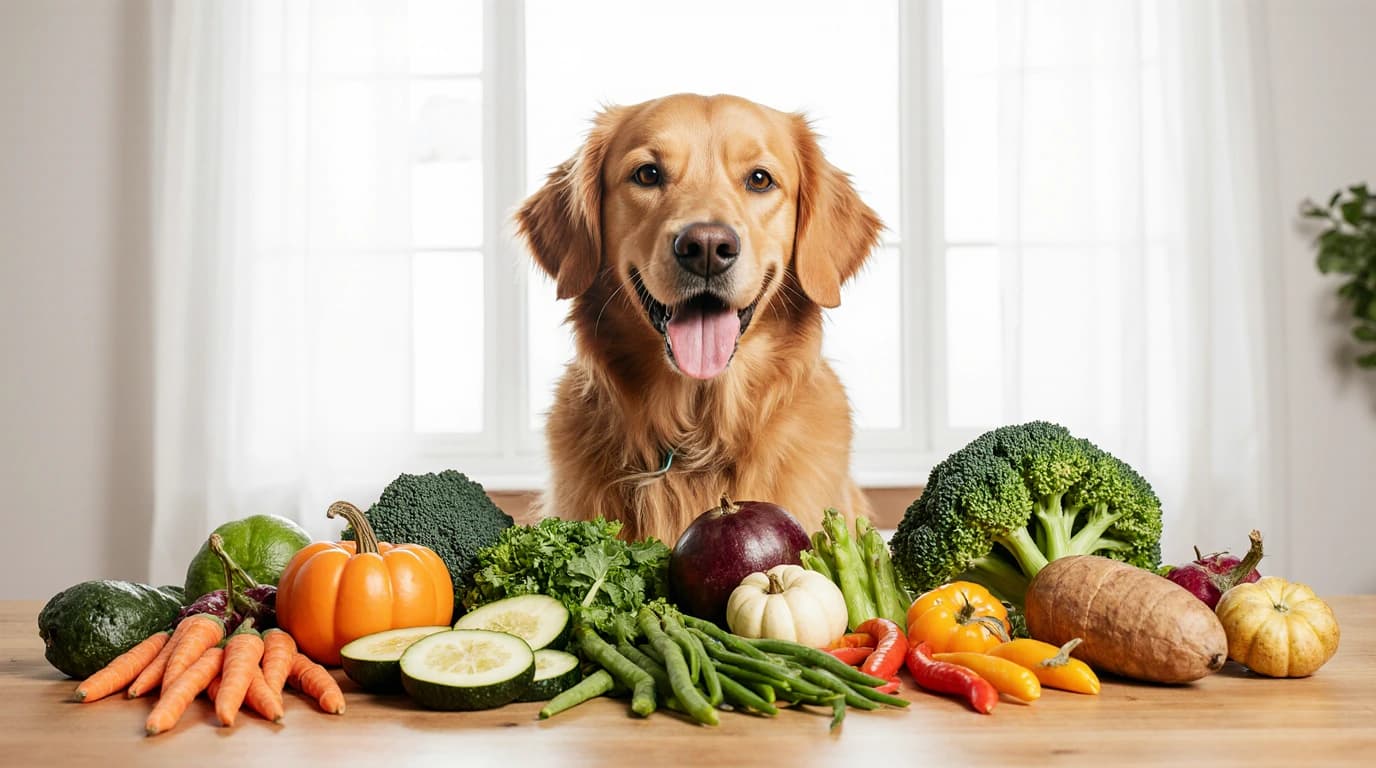
Key Takeaways
- Vegetables should make up no more than 10% of your dog's daily calories
- Always introduce one new vegetable at a time and watch for reactions
- Preparation matters — some vegetables are safer cooked, others better raw
- Remove seeds, stems, and skins where applicable before serving
- Onions, garlic, chives, and leeks are toxic to dogs in any form — always avoid them
Why Add Vegetables to Your Dog's Diet?
Commercial dog food already provides complete nutrition when formulated to AAFCO standards. So why add vegetables at all?
Benefits of Vegetables as Supplemental Food
As low-calorie treats: Most vegetables are 90–95% water with minimal calories. They replace high-calorie commercial treats without sacrificing the treat experience — important for dogs that need weight management. If you think your dog may be overweight, our guide to overweight dogs explains how to confirm it safely.
For extra fiber: Dogs benefit from dietary fiber to support healthy digestion, firm stools, and a healthy gut microbiome. Many commercial foods provide adequate but not optimal fiber levels.
As natural antioxidants: Fresh vegetables provide vitamins, polyphenols, and phytonutrients that may not survive the high-heat processing of commercial kibble.
As enrichment: Crunchy raw vegetables provide mental stimulation and oral health benefits through the mechanical action of chewing.
The 10% Rule
Vegetables — even healthy ones — should not replace your dog's balanced commercial or home-prepared diet. A useful guideline is to keep treats and extras (including vegetables) at no more than 10% of your dog's total daily caloric intake, a rule aligned with veterinary guidance on treats. We explain how to apply that rule in our how much food should I feed my dog guide.
For a 30-pound dog eating approximately 800 calories per day, that is 80 calories from extras — roughly equivalent to 1–2 cups of chopped raw carrots or cucumber.
18 Vegetables Dogs Can Eat Safely
1. Carrots
Safe: Yes | Raw or Cooked: Both
Carrots are one of the most universally recommended vegetables for dogs — and for good reason. They are nutrient-dense, low in calories, and the natural crunch provides a gentle mechanical cleaning effect on teeth.
Benefits:
- Rich in beta-carotene (converted to vitamin A for eye and immune health)
- High in fiber for digestive support
- Dental benefit from the crunchy texture when raw
- Very low in calories (about 4 calories per baby carrot)
How to serve: Raw baby carrots are ideal for treats. For smaller dogs, chop into bite-sized rounds. Cooked or steamed carrots improve beta-carotene absorption but lose the dental benefit. Frozen carrots make excellent teething toys for puppies.
Serving size: 1–3 baby carrots for small dogs; up to 3–4 full-size carrots for large dogs daily.
2. Green Beans
Safe: Yes | Raw or Cooked: Both
Green beans are a staple recommendation from vets for dogs that need to lose weight. They are high in fiber and volume while being extremely low in calories.
Benefits:
- Excellent satiety-to-calorie ratio for weight management
- Good source of vitamins C and K
- Provides iron and calcium
- High water content supports hydration
How to serve: Fresh, frozen (plain), or canned (with no added salt) are all acceptable. Serve raw as crunchy treats or lightly steamed for easier digestion. Never serve green beans cooked with butter, oil, garlic, or onion.
Serving size: A small handful (about 1/4 cup) for a medium dog as a treat. Green beans can replace a portion of regular food in weight management programs — consult your vet for guidance.
3. Sweet Potato
Safe: Yes | Raw or Cooked: Cooked only
Sweet potato is one of the most nutrient-dense vegetables you can give a dog, but it should always be cooked before serving — raw sweet potato is difficult for dogs to digest.
Benefits:
- Exceptional beta-carotene and vitamin A content
- High fiber supports both diarrhea and constipation
- Naturally sweet — most dogs love the taste
- Good source of potassium, B vitamins, and manganese
How to serve: Boiled, steamed, or baked plain. Peel before serving and cut into bite-sized pieces. Can also be mashed or pureed as a food topper. Never serve sweet potato prepared with brown sugar, cinnamon, butter, or other human seasonings.
Serving size: 1–3 tablespoons for small dogs; up to 1/4 cup for large dogs. Higher sugar content than most vegetables means portions matter, especially for overweight or diabetic dogs.
4. Pumpkin
Safe: Yes | Raw or Cooked: Cooked/Canned
Plain pumpkin is a veterinary go-to for digestive issues — it works for both diarrhea and constipation thanks to its soluble fiber content.
Benefits:
- Soluble fiber regulates digestion in both directions
- Supports anal gland health through natural bulk
- Rich in vitamin A, potassium, and zinc
- High water content for hydration
- Most dogs find it palatable
How to serve: Plain canned pumpkin (100% pumpkin, no added spices or sugar) is the most convenient form. Look for labels that say only "pumpkin" in the ingredients. Fresh cooked pumpkin is equally fine. Never use pumpkin pie filling — it contains nutmeg (toxic to dogs) and often xylitol.
Serving size: 1 teaspoon for small dogs; 1–4 tablespoons for medium to large dogs. This can be added to food daily as a digestive topper.
5. Broccoli
Safe: Yes (in moderation) | Raw or Cooked: Both (cooked preferred)
Broccoli is nutritious for dogs but has an important limitation: the florets contain isothiocyanates, compounds that cause GI irritation in larger amounts. Keep portions small.
Benefits:
- High in vitamin C, vitamin K, and fiber
- Contains sulforaphane (antioxidant and potential anti-cancer properties)
- Low in calories
How to serve: Cut into small pieces and lightly steam to reduce isothiocyanate content. Raw is fine in very small quantities. Skip the stems — they have less nutritional value and pose a choking risk for smaller dogs.
Serving size: Broccoli should stay under 10% of the meal. For most dogs, a few small florets 2–3 times per week is appropriate.
6. Peas
Safe: Yes | Raw or Cooked: Both
Peas are already a common ingredient in commercial dog foods, so their safety profile is well established. They provide both protein and fiber.
Benefits:
- Contains plant-based protein alongside the carbohydrate content
- Good source of vitamins A, K, and B vitamins
- Provides lutein for eye health
- Most dogs enjoy the taste
How to serve: Garden peas, sugar snap peas, and snow peas are all fine. Fresh or frozen (thawed) are best. Avoid canned peas with added sodium. Do not give dogs dried split peas — the concentrated starch and protein can cause digestive upset.
Note: There is ongoing FDA investigation into a potential link between pea-heavy grain-free diets and dilated cardiomyopathy (DCM) in dogs. This applies to peas as a major dietary staple in commercial food — occasional peas as a treat are not a concern.
Serving size: A small handful for medium to large dogs. A few pods or loose peas for smaller dogs.
7. Cucumber
Safe: Yes | Raw or Cooked: Raw
Cucumbers are the ultimate low-stakes dog vegetable — almost entirely water with minimal calories and a satisfying crunch.
Benefits:
- 95% water — excellent for hydration, especially in summer
- Virtually zero calories (approximately 1 calorie per slice)
- Contains small amounts of vitamins K and C
- Cooling effect — popular as a frozen treat in warm weather
How to serve: Slice into rounds or spears appropriate for your dog's size. Remove the skin for dogs with sensitive stomachs. A great substitute for high-calorie commercial treats.
Serving size: Freely given in reasonable amounts — the caloric negligibility makes cucumbers one of the few vegetables where generous portions are not a concern.
8. Zucchini
Safe: Yes | Raw or Cooked: Both
Zucchini (and other summer squash) is safe, nutritious, and extremely well-tolerated by most dogs. It is also overlooked compared to more famous vegetable options.
Benefits:
- Low in calories and fat
- Good source of vitamin C, potassium, and manganese
- High water content
- Easy to digest for most dogs
How to serve: Raw slices, steamed, or baked plain. Can be grated over food as a topper. Unlike some squash, zucchini does not need to be peeled before serving.
Serving size: Similar to cucumber — very low calorie, can be given generously in reasonable amounts.
9. Celery
Safe: Yes | Raw or Cooked: Raw (preferred)
Celery is safe and provides mild nutritional benefits, though dogs get less from it than from more nutrient-dense vegetables. Its main value is as a crunchy, low-calorie treat — and it freshens breath mildly.
Benefits:
- Contains vitamins A, C, and K
- High water content
- Mild breath-freshening effect from chlorophyll
- Low calorie
How to serve: Cut the strings (the fibrous strands can be a minor choking concern) and chop into short sections. Best served raw for the dental-cleaning crunch effect.
Serving size: A few stalks per day for medium to large dogs.
10. Bell Peppers
Safe: Yes | Raw or Cooked: Both
Bell peppers — red, yellow, or orange — are safe for dogs and particularly rich in vitamin C. Avoid hot/spicy peppers entirely, which irritate a dog's digestive system.
Benefits:
- Red bell peppers have 3x more vitamin C than green
- Rich in carotenoids and antioxidants
- Contains vitamin B6 and folate
How to serve: Remove the seeds and stem before serving — seeds can cause mild digestive irritation. Slice into strips for raw serving or lightly roast (plain, no oil or salt). Start with small pieces if introducing for the first time.
Serving size: A few strips for medium dogs, one to two strips for small dogs.
11. Spinach
Safe: Yes (with moderation) | Raw or Cooked: Both
Spinach is nutritious but contains oxalic acid, which in very large amounts can interfere with calcium absorption and put stress on kidneys. For healthy dogs in normal treat quantities, this is not a practical concern.
Benefits:
- Excellent source of iron, folate, and vitamins A, C, and K
- Contains antioxidants including lutein
- Anti-inflammatory properties
How to serve: Finely chopped raw or briefly steamed. Avoid serving spinach daily in large amounts. Not recommended for dogs with known kidney disease due to oxalic acid content.
Serving size: A small handful 2–3 times per week maximum.
12. Kale
Safe: Yes (with moderation) | Raw or Cooked: Both
Kale is a nutritional powerhouse — but it shares the same oxalic acid concern as spinach and also contains calcium oxalate and isothiocyanates that can cause digestive irritation in larger amounts.
Benefits:
- Rich in vitamins K, A, and C
- High antioxidant content
- Anti-inflammatory properties
How to serve: Small amounts 2–3 times per week maximum. Chopped finely and mixed into food or given as a small treat. Not appropriate for dogs with kidney or bladder stones.
Serving size: A few small leaves or a tablespoon chopped for medium dogs.
13. Beets
Safe: Yes | Raw or Cooked: Cooked preferred
Beets are safe for dogs and provide a range of antioxidants, though their high natural sugar content means moderation is important.
Benefits:
- Rich in folate, potassium, and manganese
- Contains betalains — powerful antioxidants with anti-inflammatory properties
- Good source of fiber
How to serve: Cooked plain beets (not pickled — the vinegar and salt are problematic). Let cool completely before serving and cut into small pieces. Do not be alarmed if your dog's urine or stool appears slightly pink — this is harmless.
Serving size: 1–2 tablespoons for medium dogs, 1 teaspoon for small dogs.
14. Butternut Squash
Safe: Yes | Raw or Cooked: Cooked only
Butternut squash is an excellent source of vitamin A and beta-carotene. Like sweet potato, it should always be served cooked — raw squash is too fibrous and starchy for easy digestion.
Benefits:
- Exceptional vitamin A from beta-carotene
- High fiber for digestive health
- Contains potassium and magnesium
- Sweet flavor most dogs enjoy
How to serve: Roasted, steamed, or baked plain without any seasoning. Remove the skin before serving. Can be mashed as a food topper.
Serving size: 1–3 tablespoons for medium dogs.
15. Asparagus
Safe: Yes | Raw or Cooked: Cooked preferred
Asparagus is safe but not particularly practical for dogs — the tough, fibrous texture is difficult for many dogs to chew, and cooking makes it limp with little nutritional advantage over easier vegetables.
Benefits:
- Good source of vitamins K, A, and folate
- Contains antioxidants
- High fiber
How to serve: If you choose to give asparagus, steam or boil until tender and cut into small pieces. Remove the woody lower stem. Not a top recommendation simply because better options exist.
Note: Asparagus causes harmless but distinctly smelly urine in dogs (as in humans) — not a health concern, just a heads-up.
Serving size: A small spear or two for medium dogs, occasionally.
16. Corn (Off the Cob)
Safe: Yes (off the cob only) | Raw or Cooked: Both
Corn kernels are safe for dogs and are already present in many commercial dog foods. The danger is the cob — corn cobs are a leading cause of intestinal obstruction in dogs and should never be given as a chew or treat.
Benefits:
- Source of carbohydrates and a moderate amount of protein
- Contains linoleic acid (an omega-6 fatty acid)
- Most dogs enjoy the sweet taste
How to serve: Kernels only, served plain without butter or salt. A few spoonfuls as an occasional treat.
Serving size: A few tablespoons of kernels — not a daily staple.
17. Lettuce
Safe: Yes | Raw or Cooked: Raw
Lettuce — romaine, iceberg, green leaf — is essentially water with leafy fiber. It is safe and very low in calories but does not provide significant nutritional value compared to darker greens.
Benefits:
- 90%+ water — good for hydration
- Very low calorie
- Contains small amounts of vitamins A and C
- Easy to chew, even for senior dogs or puppies
How to serve: Torn into pieces appropriate for your dog's size. A nice addition to food or as a hydrating summer treat.
Serving size: As desired — caloric negligibility makes this a very forgiving option.
18. Fennel
Safe: Yes | Raw or Cooked: Both
Fennel is underused as a dog vegetable. All parts of the plant — bulb, leaves, and seeds — are safe, and fennel has mild digestive-soothing properties.
Benefits:
- Contains anethole, which has mild anti-spasmodic effects on the gut
- Source of vitamin C and potassium
- Mild flavoring that some dogs enjoy
How to serve: Thinly slice the bulb or chop the fronds and offer as a treat or food mix-in. The seeds can be given in small amounts but the bulb is more practical.
Serving size: A few slices or a tablespoon chopped for medium dogs.
Quick Reference Table
| Vegetable | Safe | Best Form | Key Benefit | Serving Note |
|---|---|---|---|---|
| Carrots | ✅ | Raw or cooked | Eye health, dental | Up to 3–4 daily |
| Green beans | ✅ | Raw or cooked | Weight management | Generous amounts OK |
| Sweet potato | ✅ | Cooked only | Vitamins, fiber | 1–4 tbsp max |
| Pumpkin | ✅ | Canned plain | Digestive health | 1–4 tbsp daily |
| Broccoli | ✅ (small amounts) | Steamed | Antioxidants | Under 10% of meal |
| Peas | ✅ | Fresh or frozen | Protein, fiber | Small handful |
| Cucumber | ✅ | Raw | Hydration | Freely given |
| Zucchini | ✅ | Raw or cooked | Low calorie | Generous amounts OK |
| Celery | ✅ | Raw | Breath, crunch | A few stalks |
| Bell peppers | ✅ | Raw or roasted | Vitamin C | A few strips |
| Spinach | ✅ (moderation) | Raw or steamed | Iron, antioxidants | 2–3x per week max |
| Kale | ✅ (moderation) | Chopped | Vitamin K | 2–3x per week max |
| Beets | ✅ | Cooked | Antioxidants | 1–2 tbsp |
| Butternut squash | ✅ | Cooked | Vitamin A | 1–3 tbsp |
| Asparagus | ✅ | Steamed | Vitamins | Occasional only |
| Corn (kernels only) | ✅ | Plain kernels | Carbs | Occasional treat |
| Lettuce | ✅ | Raw | Hydration | As desired |
| Fennel | ✅ | Raw or cooked | Digestion | Small amounts |
Vegetables That Are Toxic to Dogs
Understanding what dogs cannot eat is just as important as knowing what they can. For the broader list of dangerous foods, see our guide to foods dogs should never eat.
Onions, Garlic, Chives, and Leeks
These are the most dangerous vegetables in the kitchen for dogs — and the most commonly given accidentally in cooked food.
All members of the allium family contain compounds (thiosulfates and organosulfides) that damage a dog's red blood cells, causing hemolytic anemia. This can develop over 1–5 days after ingestion, making it especially dangerous because owners often don't connect the symptoms to what their dog ate.
The danger is dose-dependent but no amount is truly safe. As little as 5g per kg of body weight of raw onion can cause toxicity. Garlic is approximately 5 times more toxic than onion per gram.
Critically: all forms are toxic — raw, cooked, powdered, dehydrated, and incorporated into other foods like broths, gravies, and seasonings.
Symptoms of allium poisoning:
- Lethargy and weakness 1–3 days after ingestion
- Pale or yellowish gums
- Rapid breathing
- Red or brown-tinged urine
- Vomiting and loss of appetite
If your dog has eaten any amount of onion or garlic, contact your vet or the ASPCA Animal Poison Control Center: (888) 426-4435.
Wild Mushrooms
Commercially cultivated mushrooms (white button, cremini, portobello) are generally safe in small amounts. Wild mushrooms are not — many species are lethally toxic and cannot be reliably identified without expert knowledge.
Never allow your dog to eat mushrooms found growing in the yard, on walks, or in wooded areas.
Rhubarb
Both the stalks and leaves of rhubarb contain oxalic acid and anthraquinone glycosides at levels that cause kidney damage in dogs. Symptoms include drooling, vomiting, diarrhea, weakness, and tremors. Keep dogs away from rhubarb plants entirely.
Raw Potatoes and Green Potatoes
Cooked plain potatoes are safe in small amounts. Raw potatoes and potatoes or potato skins that have developed a green tint contain solanine, a compound that causes neurological and gastrointestinal toxicity in dogs. Green, sprouted, or unripe potatoes should never be given.
Tomato Plants (Green Tomatoes and Leaves)
Ripe red tomato flesh is safe in small quantities. The leaves, stems, and unripe green fruit of the tomato plant contain solanine and tomatine — the same family of toxic compounds found in raw potatoes. Keep dogs away from tomato plants in the garden.
Avocado
Avocado contains persin in the skin, pit, and leaves, which can cause vomiting and diarrhea in dogs. The ripe flesh has very low persin content, making it a borderline case — small amounts of plain flesh may be tolerated by most dogs, but the pit is a serious choking and blockage hazard, and the high fat content can trigger pancreatitis. It is simpler and safer to avoid avocado entirely.
How to Introduce Vegetables to Your Dog
Follow the one-at-a-time rule. Introduce only one new vegetable per week. If your dog has a reaction (vomiting, diarrhea, excessive gas, skin irritation), you will know exactly what caused it.
Start small. Offer a few small pieces first, even if the vegetable is known to be safe. Individual dogs can have sensitivities to foods that are safe for dogs generally.
Prepare properly. Wash thoroughly to remove pesticides. Remove seeds, skins (where applicable), and tough stems. Cut into bite-sized pieces to prevent choking.
Account for calories. Even low-calorie vegetables add up if given in large quantities alongside a complete diet. Adjust food portions slightly if you are adding vegetables regularly.
Watch for individual reactions. Broccoli causes gas in some dogs but not others. Spinach is perfectly fine for most dogs but inappropriate for those prone to kidney stones. Know your individual dog.
Vegetable Preparation by Dog Size
| Dog Size | Weight Range | Best Prep | Piece Size |
|---|---|---|---|
| Small breeds | Under 20 lbs | Softened/cooked or finely chopped | Pea-sized pieces |
| Medium breeds | 20–50 lbs | Raw or cooked, chopped | Nickel to quarter-sized |
| Large breeds | 50–100 lbs | Raw or cooked, standard cut | Quarter-sized or larger |
| Giant breeds | Over 100 lbs | Raw or cooked | Can handle larger pieces |
For puppies: Start with soft, easily digestible options — cooked carrots, pumpkin puree, and cooked sweet potato are ideal first vegetables. Avoid raw fibrous vegetables until 6+ months.
For senior dogs: Prioritize soft textures. Steam or cook vegetables that are normally given raw. Pureeing vegetables over food is an excellent option for dogs with dental issues. Diet and dental health are closely linked in older dogs — our senior dog dental health and diet guide explains why.
Vet Tips for Feeding Vegetables to Dogs
- Keep a food diary when introducing new vegetables. Note the food, amount, and any subsequent changes in digestion or behavior. This is invaluable information for your vet if a problem arises.
- Fiber changes need time. Adding vegetables significantly increases dietary fiber. Some dogs get loose stools initially as their gut adjusts. Introduce gradually and maintain the change consistently.
- Vegetables are not a balanced diet. Do not replace a significant portion of your dog's commercial food with vegetables without veterinary guidance. Vegetables complement nutrition — they do not provide complete nutrition on their own.
- Organic vs. conventional: Washing produce thoroughly removes most pesticide residue. Organic is preferable if it fits your budget, but is not necessary if you wash produce well.
Frequently Asked Questions
What vegetables can dogs eat every day? Carrots, cucumber, green beans, and zucchini are the best choices for daily feeding — they are very low in calories, well-tolerated by most dogs, and nutritionally beneficial. Rotate for variety.
Can dogs eat raw vegetables? Yes — many vegetables are safe raw. Carrots, cucumber, celery, zucchini, and bell peppers are excellent raw. Others like sweet potato and butternut squash should always be cooked first. Raw broccoli is fine in tiny amounts but cooked is safer.
How much vegetable can I give my dog per day? Use the 10% rule: vegetables and all extras should not exceed 10% of your dog's total daily caloric intake. For most dogs, this works out to a few tablespoons to half a cup of mixed vegetables depending on size.
Are frozen vegetables OK for dogs? Yes — plain frozen vegetables with no added salt or seasoning are safe and convenient. Green beans, peas, and carrots are commonly available frozen and work well. Thaw before serving or let your dog enjoy them slightly frozen as a cooling treat.
What happens if my dog eats onion or garlic? Contact your veterinarian or the ASPCA Animal Poison Control Center immediately — (888) 426-4435. Do not wait for symptoms to develop. Treatment is most effective when started early, before anemia develops.
Can dogs eat corn on the cob? No — the cob, not the kernels, is the danger. Corn on the cob is a very common cause of intestinal obstruction requiring emergency surgery. Kernels off the cob are safe in small amounts.
Can puppies eat vegetables? Yes, with care. Start after 8 weeks with soft, easily digestible options: pureed pumpkin, cooked carrot, and cooked sweet potato. Avoid raw hard vegetables until 4–6 months old, and introduce all new foods one at a time.
Final Verdict
Vegetables are one of the best things you can add to your dog's treat routine — low in calories, high in nutrients, and naturally enriching. Carrots, green beans, cucumber, zucchini, pumpkin, and sweet potato are excellent starting points that suit virtually every dog.
The rules are simple: keep portions within the 10% guideline, prepare vegetables properly, introduce one at a time, and keep onions and garlic completely out of reach at all times.
With the right vegetables in rotation, your dog benefits from natural fiber, vitamins, and enrichment — without the empty calories of most commercial treats.
Topics
Our goal is to give you the most helpful, research-backed information possible. This content is for educational purposes only. For health concerns specific to your dog, always consult your veterinarian.
DogMealGuide Editorial Team
DogMealGuide Editorial Team provides research-backed, practical advice to help dog owners make better nutrition decisions for their pets.
This article is for educational purposes only and is not a substitute for professional veterinary advice.
Best Dog Health Guides
Our top expert-reviewed picks in this category