Raw Diet vs Kibble: Which Dog Food Is Best for Your Dog?
DogMealGuide Editorial Team
DogMealGuide Editorial Team provides research-backed, practical advice to help dog owners make better nutrition decisions for their pets.
Raw Diet vs Kibble: Which Dog Food Is Best for Your Dog?
Every dog owner hits the same wall sooner or later — standing in the pet food aisle (or scrolling endlessly online) wondering whether to go raw or stick with kibble. Both camps are vocal, both have real science behind them, and both can produce healthy, thriving dogs.
The honest answer is that the right choice depends on your dog, your lifestyle, and your budget. This guide breaks down everything you need to know about the raw diet vs kibble debate so you can make a confident, informed decision.
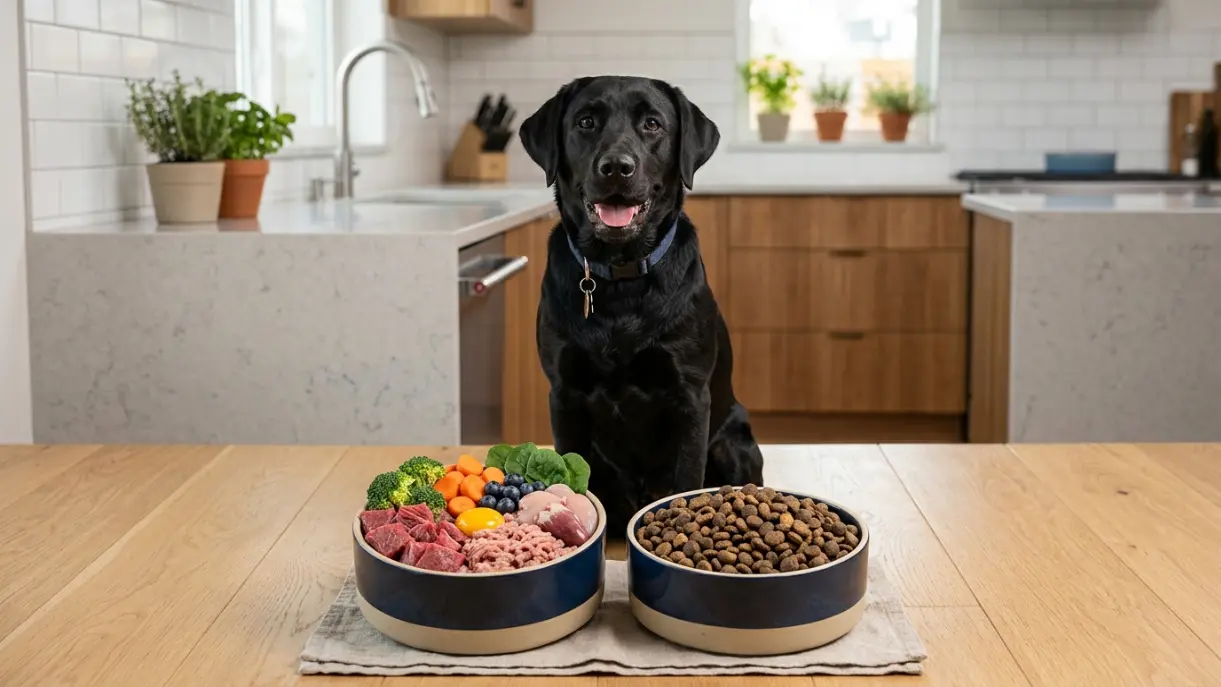
Key Takeaways
- Both raw and kibble diets can support a healthy dog when chosen carefully.
- Raw diets offer minimally processed protein but carry real food-safety risks.
- High-quality kibble is convenient, shelf-stable, and nutritionally complete.
- Cost, prep time, storage, and your dog's health history all matter.
- Always transition slowly and consult your vet before switching diets.
What Is a Raw Dog Food Diet?
A raw dog food diet — sometimes called BARF (Biologically Appropriate Raw Food) or RMB (Raw Meaty Bones) — consists of uncooked animal proteins, organs, raw bones, and often some fruits and vegetables.
Common components of a raw diet include:
- Muscle meat — chicken, beef, lamb, turkey, duck
- Raw meaty bones — chicken necks, turkey necks, beef ribs
- Organ meat — liver, kidney, heart (typically 5–10% of total diet)
- Raw eggs
- Vegetables and fruit — leafy greens, carrots, blueberries
- Dairy — plain yogurt or kefir (for some dogs)
Proponents argue that this closely mirrors what dogs would eat in the wild, promoting shinier coats, cleaner teeth, smaller stools, and higher energy levels.
What Is Kibble?
Kibble is dry extruded dog food — the most widely fed dog food in the world. Ingredients are cooked at high temperatures and pressure, then shaped into bite-sized pellets.
A high-quality kibble provides:
- A precise, AAFCO-tested nutritional profile
- Added vitamins and minerals to replace nutrients lost during processing
- Long shelf life without refrigeration
- Consistent portioning with clear calorie counts
Kibble ranges from budget grocery-store brands to premium, grain-free, and limited-ingredient formulas. Quality varies enormously — the ingredient list and AAFCO statement matter more than the price tag.
Raw Diet vs Kibble: Nutritional Comparison
| Factor | Raw Diet | Kibble |
|---|---|---|
| Protein source | Whole, unprocessed meat | Rendered or cooked meat/meal |
| Moisture content | 60–80% | 8–12% |
| Processing level | Minimal | High-heat extrusion |
| Digestibility | Generally high | Varies by formula |
| AAFCO compliance | Depends on recipe | Most quality brands |
| Bioavailability | High (enzymes intact) | Good (supplemented) |
| Consistency | Varies by recipe | Very consistent |
Protein and Amino Acids
Raw meat retains natural enzymes and amino acids that high-heat processing can degrade. However, premium kibble manufacturers use precise formulations — and many add back essential amino acids like taurine and L-carnitine — so nutritional gaps are rarely a practical issue for most dogs eating quality kibble.
Moisture and Hydration
This is one of raw food's clearest advantages. Dogs fed raw diets typically consume 3–4× more moisture than kibble-fed dogs. Adequate hydration supports kidney function, joint lubrication, and digestion. If your dog eats kibble, always provide unlimited fresh water and consider occasional wet food toppers.
Carbohydrates
Raw diets are naturally low in carbohydrates. Kibble typically contains 30–60% carbs from grains or legumes. While dogs can digest carbohydrates efficiently, dogs with certain metabolic conditions or food sensitivities may do better on a lower-carb raw approach.
Pros and Cons of a Raw Diet
Pros
1. Minimally processed ingredients No artificial preservatives, fillers, or mystery by-products. What you see is what your dog eats.
2. Higher moisture intake Naturally supports hydration, urinary health, and kidney function.
3. Potential coat and skin improvements Many owners report a noticeably shinier coat and less itching within weeks of switching.
4. Smaller, firmer stools Because raw food is highly digestible, dogs produce less waste and stools are often firmer and less odorous.
5. Dental benefits Chewing raw meaty bones provides natural mechanical cleaning, reducing plaque and tartar buildup. For more on how teeth and diet interact as dogs age, see our senior dog dental health and diet guide.
Cons
1. Food safety risks Raw meat can harbor Salmonella, Listeria, E. coli, and Campylobacter — posing risks to both dogs and the humans handling the food. The FDA outlines the risks of raw pet food for pets and the people handling it. Immunocompromised individuals and households with young children should be especially cautious.
2. Nutritional imbalance risk Home-prepared raw diets are frequently imbalanced. A 2022 study found that over 60% of homemade raw recipes lacked adequate calcium, phosphorus, or key vitamins. Work with a veterinary nutritionist if you DIY.
3. Cost Quality raw food typically costs 2–4× more than an equivalent kibble diet.
4. Storage and prep time Raw food must be refrigerated or frozen and thawed in advance. It requires more kitchen hygiene and planning.
5. Travel and boarding challenges Kibble is far easier to travel with, board with, or hand off to a pet sitter.
Pros and Cons of Kibble
Pros
1. Convenience Measure, pour, done. No prep, no thawing, no cross-contamination risk.
2. Nutritionally complete and tested Reputable kibble brands are formulated to meet AAFCO nutrient profiles and many undergo actual feeding trials.
3. Long shelf life An open bag keeps for weeks. Sealed bags last months. No freezer needed.
4. Lower cost Even premium kibble is generally more affordable than a balanced raw diet.
5. Wide availability Available in every pet store, grocery store, and online retailer.
Cons
1. High processing temperatures Extrusion can degrade heat-sensitive nutrients and natural enzymes. Manufacturers compensate with supplements, but some argue this is inferior to whole-food sources.
2. Low moisture Dogs eating only kibble get very little dietary moisture, which can stress the kidneys over time — especially in dogs predisposed to urinary issues.
3. Ingredient quality varies widely Cheap kibble can contain low-quality meat meals, artificial colors, and excessive fillers. Always read the label.
4. Palatability Some dogs — especially picky eaters or those switching from wet/raw — find dry kibble less appealing.
Which Diet Is Right for Your Dog?
Choose Raw If:
- Your dog has food allergies or sensitivities that haven't improved on kibble
- You have time to source, prep, and store raw food safely
- Your dog is generally healthy with no immunocompromising conditions
- Your household doesn't include immunocompromised people or young children
- You can work with a vet or veterinary nutritionist to balance the diet
Choose Kibble If:
- You need convenience and predictability
- You're feeding a puppy, pregnant dog, or senior with specific health needs
- Your budget is limited (quality raw food is expensive)
- You travel frequently or use boarding/pet-sitting services
- Food safety is a concern in your household
Consider a Hybrid Approach
Many owners find the best results by mixing both. This might look like:
- Kibble as the daily base with a raw protein topper 2–3 times per week
- Rotating between a commercial raw food and kibble by meal
- Using freeze-dried raw food (safer, shelf-stable) as a kibble topper
Always transition any diet change over 7–14 days to avoid digestive upset.
Safety Tips for Raw Feeding
If you choose to feed raw, food safety is non-negotiable:
- Source from reputable suppliers — look for USDA-inspected facilities or human-grade meat
- Keep raw meat frozen until 24–48 hours before use; thaw in the refrigerator, never on the counter
- Wash all surfaces, bowls, and hands thoroughly after handling raw food
- Avoid raw pork and raw wild game — higher risk of parasites
- Never feed cooked bones — they splinter and can cause serious injury; only raw bones. For the full list of hazardous foods and what to do in an emergency, see our foods dogs should never eat guide.
- Balance the diet — work with a veterinary nutritionist for home-prepared recipes
How to Choose a High-Quality Kibble
Not all kibble is created equal. Here's what to look for:
- Named protein first on the ingredient list (e.g., "chicken," not "poultry by-product meal")
- AAFCO statement saying the food is complete and balanced for your dog's life stage — the AAFCO explains how to read one
- No artificial colors or preservatives (avoid BHA, BHT, ethoxyquin)
- Whole food ingredients — real fruits, vegetables, and whole grains if not grain-free
- Transparent manufacturer with published safety testing and recall history
Avoid marketing buzzwords like "natural," "holistic," or "premium" — these are unregulated terms. Stick to the ingredient list and AAFCO statement.
Frequently Asked Questions
Is raw food actually better than kibble for dogs? Not necessarily. Both can support a healthy dog. Raw food offers minimally processed ingredients and higher moisture, but carries food safety risks and requires careful nutritional balancing. High-quality kibble is convenient, safe, and nutritionally complete for most dogs.
Can I mix raw food and kibble? Yes. Many owners mix both without issue. Some vets caution that raw meat and kibble digest at different rates, but most dogs tolerate a hybrid diet well — especially when introduced gradually.
Is raw food safe for puppies? It can be, but puppies have specific and precise nutrient requirements for bone and brain development. An imbalanced raw diet can cause serious developmental problems. If feeding raw to a puppy, always use a commercially prepared, AAFCO-compliant raw food rather than homemade.
Why does my dog have diarrhea after switching to raw? Sudden diet changes almost always cause digestive upset. Always transition over 7–14 days, starting with 75% old food / 25% new food and gradually shifting the ratio. If diarrhea persists beyond a week, consult your vet. For an upset stomach that lingers after a diet change, a short-term bland diet can help your dog recover.
Is freeze-dried raw food as good as fresh raw? Freeze-drying preserves most of the nutritional value of raw food while eliminating the majority of pathogen risk. It's a good middle-ground option — higher quality than most kibble, safer and more convenient than fresh raw.
What's the cheapest way to feed raw? Buy in bulk directly from farms or butchers, focus on cheaper cuts like chicken backs and beef hearts, and prepare large batches to freeze in daily portions. Even so, raw feeding typically costs more than quality kibble.
The Bottom Line
The raw diet vs kibble debate doesn't have a universal winner. Both options can produce healthy, happy dogs when chosen thoughtfully.
Raw feeding rewards you with minimally processed nutrition and often impressive coat and digestion results — but it demands your time, budget, and strict food-safety discipline.
Kibble wins on convenience, cost, consistency, and safety — especially when you choose a reputable brand with a clear AAFCO compliance statement.
The most important thing is feeding your individual dog, not following a trend. Pay attention to your dog's energy, coat, stool quality, and weight. Consult your veterinarian before making major dietary changes, and transition slowly no matter which direction you go.
A dog thriving on kibble is better off than a dog on a poorly balanced raw diet — and vice versa.
Topics
Our goal is to give you the most helpful, research-backed information possible. This content is for educational purposes only. For health concerns specific to your dog, always consult your veterinarian.
DogMealGuide Editorial Team
DogMealGuide Editorial Team provides research-backed, practical advice to help dog owners make better nutrition decisions for their pets.
This article is for educational purposes only and is not a substitute for professional veterinary advice.
Best Diet Types Guides
Our top expert-reviewed picks in this category