Is My Dog Overweight? Signs, Risks & What to Do
DogMealGuide Editorial Team
DogMealGuide Editorial Team provides research-backed, practical advice to help dog owners make better nutrition decisions for their pets.
Is My Dog Overweight? Signs, Risks & What to Do
More than half of all dogs in the US are overweight or obese — and most owners don't realize it. Extra pounds creep on slowly, and because we see our dogs every day, the change is easy to miss. By the time a vet flags it, the weight has often been building for months or years.
Knowing how to tell if your dog is overweight, understanding the health consequences, and acting early can add years to your dog's life. This guide covers everything you need to know.
Key Takeaways
- Over 50% of US dogs are overweight or obese — it's the most common preventable health problem in pets.
- You can assess your dog's weight at home using a simple rib and waist check.
- Excess weight shortens lifespan by an average of 2 years and raises the risk of diabetes, arthritis, and heart disease.
- Weight loss in dogs must be gradual — rapid loss is dangerous.
- Diet quality and portion control matter more than exercise alone.
How to Tell If Your Dog Is Overweight
The number on the scale only tells part of the story. Because ideal weight varies enormously by breed — a healthy Chihuahua weighs 6 lbs, a healthy Great Dane weighs 130 lbs — vets use Body Condition Score (BCS) instead of raw numbers.
The Body Condition Score (BCS)
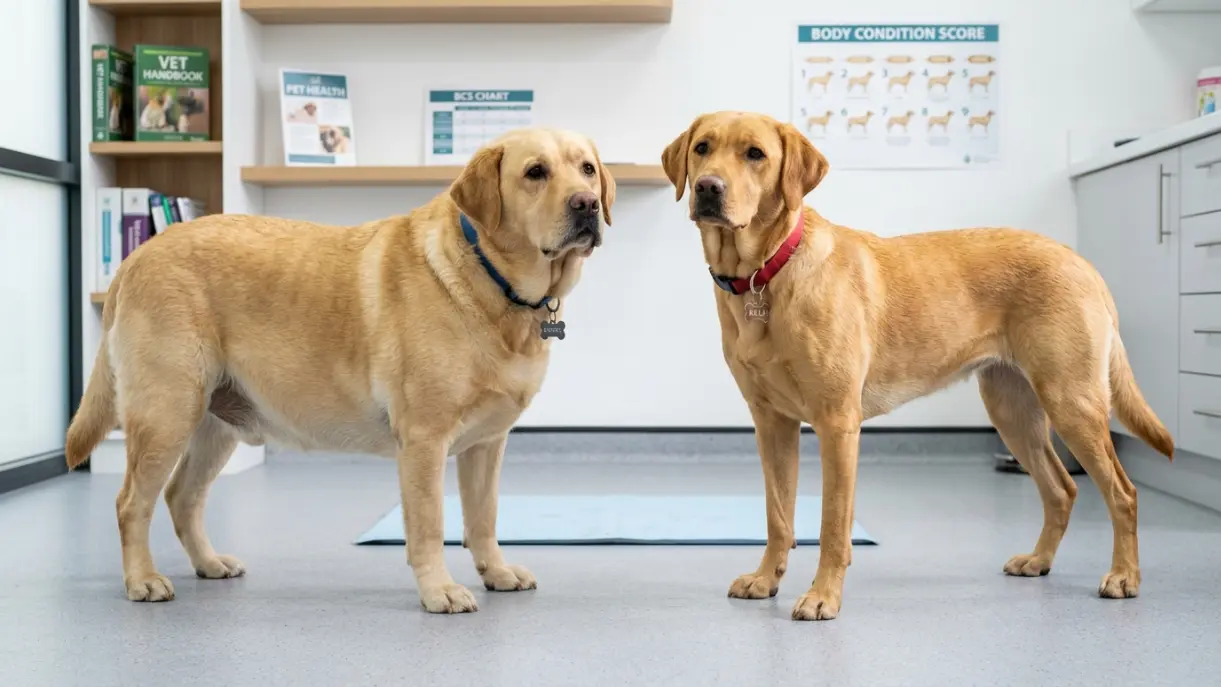
BCS is a 9-point scale where 4–5 is ideal:
| Score | Description |
|---|---|
| 1–3 | Underweight — ribs, spine, and hip bones clearly visible |
| 4–5 | Ideal — ribs easily felt, waist visible from above |
| 6–7 | Overweight — ribs hard to feel, waist barely visible |
| 8–9 | Obese — ribs buried under fat, no waist, fat deposits on neck and limbs |
The At-Home Rib Test
Place both hands on your dog's ribcage with light pressure — no pressing. You should be able to feel each rib individually, like running your fingers over the back of your knuckles.
- Ribs easy to feel with no pressing → healthy weight
- Ribs felt only with firm pressure → likely overweight
- Ribs not felt at all → obese
The Waist Check
Stand directly above your dog and look down. A healthy dog has a visible waist — an hourglass-like narrowing behind the ribs. Then view your dog from the side: the belly should tuck upward behind the ribcage, not hang level or droop.
- Clear waist tuck visible from above and behind → healthy
- Straight or rounded sides with no waist → overweight
- Belly hanging below chest level → obese
Breed-Specific Considerations
Some breeds naturally carry more weight or have body shapes that make assessment tricky:
- Barrel-chested breeds (Bulldogs, Pugs) — ribs harder to palpate; waist less visible even at healthy weight
- Sighthounds (Greyhounds, Whippets) — ribs normally visible; ideal BCS looks thin to untrained eyes
- Fluffy breeds (Huskies, Samoyeds) — thick coats hide true shape; always use your hands
When in doubt, ask your vet. Most clinics will do a quick BCS assessment for free at any visit.
Common Signs Your Dog Is Overweight
Beyond the rib and waist check, watch for these behavioral and physical signs:
- Tires easily on walks — gets winded or lags behind sooner than usual
- Labored breathing at rest or during mild activity
- Difficulty getting up from lying down, especially after sleeping
- Reluctance to exercise — less interest in play, shorter self-initiated walks
- Visible fat deposits — around the neck, base of tail, or along the spine
- Waddling gait — hips swing wider than normal when walking
- Increased sleeping — more sedentary than their previous baseline
Health Risks of an Overweight Dog
This is where it gets serious. Excess body fat isn't just cosmetic — it's metabolically active tissue that drives inflammation and stresses every organ system.
Shortened Lifespan
A landmark 14-year study by Purina found that dogs kept lean lived an average of 1.8 years longer than their litter-matched overweight counterparts. For a breed that lives 10–12 years, that's nearly 15–20% more life.
Joint Disease and Arthritis
Every extra pound of body weight places approximately 4 pounds of additional pressure on joints. This accelerates cartilage breakdown, worsens existing hip dysplasia, and can cause dogs to develop arthritis years earlier than they otherwise would.
Type 2 Diabetes
Excess fat impairs insulin sensitivity. Obese dogs — particularly middle-aged, spayed females — are significantly more likely to develop diabetes mellitus, which requires daily insulin injections and lifelong management.
Heart and Respiratory Disease
Fat deposits around the chest cavity restrict lung expansion. The heart works harder to pump blood through a larger body mass. Both lead to higher blood pressure, reduced stamina, and in severe cases, heart failure.
Increased Surgical and Anesthetic Risk
Obese dogs are far more difficult and risky to anesthetize. Fat stores absorb and retain anesthetic drugs unpredictably, body temperature is harder to maintain, and recovery takes longer. Even routine procedures like spay/neuter carry meaningfully higher risk in overweight animals.
Cancer Risk
Studies have found correlations between obesity and certain cancers in dogs, including mammary tumors and bladder transitional cell carcinoma. While causation is complex, chronic inflammation driven by excess adipose tissue is a likely contributing factor.
Why Dogs Gain Weight
Understanding the cause helps you fix it — and prevent it from coming back.
Overfeeding
The single biggest driver. Most owners underestimate portions by 20–30%, especially when free-feeding (leaving food out all day) or eyeballing measurements instead of weighing. Feeding guidelines on bags are also often generous — they're designed for active, unspayed/unneutered dogs.
Too Many Treats
A small biscuit for a 15 lb dog can be the caloric equivalent of a chocolate bar for a human. If your dog gets several treats a day plus table scraps, those calories add up fast — often 20–30% on top of their daily food intake.
Wrong Food for Their Life Stage
Adult food fed to a senior dog — who has a slower metabolism and needs fewer calories — is a common cause of gradual weight gain that owners attribute to "just getting older."
Spaying and Neutering
Sterilization reduces metabolic rate by roughly 20–30%. Many owners don't adjust food intake post-surgery, leading to steady weight gain over the following months. After spay or neuter, reduce daily calories by 20–25% unless your dog is very active.
Certain Medical Conditions
- Hypothyroidism — underactive thyroid causes metabolism to slow dramatically; common in middle-aged dogs
- Cushing's disease (hyperadrenocorticism) — excess cortisol drives fat redistribution and increased appetite
- Insulinoma — rare tumor causing chronic low blood sugar and hunger
If your dog is gaining weight despite normal portions and activity, ask your vet to run a thyroid panel and basic bloodwork.
Breed Predisposition
Some breeds are genetically wired to overeat and store fat efficiently:
- Labrador Retrievers (a gene variant reduces satiety signaling)
- Cocker Spaniels
- Dachshunds
- Beagles
- Basset Hounds
- Pugs and Bulldogs
These dogs need stricter portion control and less free access to food from puppyhood.
How to Help Your Dog Lose Weight Safely
Step 1: Get a Vet Assessment First
Before changing anything, confirm the cause. Bloodwork rules out thyroid or hormonal issues. Your vet can also set a realistic target weight and timeline — typically 1–2% of body weight lost per week.
Losing weight faster than this risks muscle loss, nutritional deficiency, and in severe cases, hepatic lipidosis (fatty liver disease).
Step 2: Calculate True Caloric Need
Ask your vet for your dog's Resting Energy Requirement (RER) and activity multiplier. The RER formula follows the standard method for estimating daily energy needs in the Merck Veterinary Manual. Online calculators can estimate this, but vet guidance is more accurate — especially for dogs with health conditions. For a step-by-step way to work out portions, see our how much food should I feed my dog guide.
For a rough estimate:
- Calculate calories needed for the target weight, not current weight
- Reduce current intake by 20–25% to drive gradual loss
- Never drop below 60% of normal maintenance calories without vet supervision
Step 3: Measure Every Meal
Ditch the scoop — use a kitchen scale. Cup measurements vary by 20–30% depending on how you fill the cup. Weigh food in grams every single meal.
Step 4: Switch to a Weight-Management Formula
Weight-management kibbles are lower in fat and calories but higher in fiber, keeping your dog feeling fuller on less food. Look for:
- Reduced fat (under 10% on dry matter basis)
- Increased fiber (over 8% crude fiber)
- High-quality protein as the first ingredient (to preserve muscle)
- L-carnitine (supports fat metabolism)
Prescription weight-loss foods like Hill's Prescription Diet r/d or Royal Canin Satiety Support are highly effective for obese dogs. To make the switch smoothly, our low-fat dog diet guide covers the exact steps.
Step 5: Rethink Treats
Treats should make up no more than 10% of daily calories. Options that are naturally low-calorie:
- Baby carrots
- Plain cucumber slices
- Blueberries (a few at a time)
- Small pieces of cooked chicken breast
- Ice cubes (many dogs love them)
For serving sizes and preparation tips, our guide to vegetables dogs can eat covers carrots, cucumber, blueberries, and other low-calorie options in detail. Cut commercial treats by at least half — or switch to kibble pieces from your dog's daily allowance used as treats.
Step 6: Increase Activity Gradually
Exercise helps but is secondary to diet — you can't out-walk a calorie surplus. Once your vet clears it:
- Add 10–15 minutes to daily walks each week
- Introduce swimming if joint pain is a factor (low-impact, high calorie burn)
- Use puzzle feeders and sniff walks to add mental stimulation without stressing joints
Step 7: Weigh In Monthly
Reweigh every 2–4 weeks and adjust portions if progress stalls or is too fast. Most pet stores and vet offices will let you use their scale for free.
How Long Does Dog Weight Loss Take?
Patience is essential. A dog that needs to lose 10 lbs should take 4–6 months to do it safely. Dogs that lose weight too quickly lose muscle alongside fat, which slows metabolism further and makes maintenance harder.
| Amount to Lose | Realistic Timeline |
|---|---|
| 1–3 lbs | 4–8 weeks |
| 4–7 lbs | 2–4 months |
| 8–15 lbs | 4–7 months |
| 15+ lbs | 6–12 months |
Frequently Asked Questions
How do I know if my dog is at a healthy weight? Use the BCS (Body Condition Score) method: you should be able to feel ribs easily with light pressure, see a clear waist tuck from above, and see the belly tuck upward from the side. When in doubt, ask your vet to assess at your next visit.
My dog always acts hungry — is that normal for a dog on a diet? Some hunger is expected during calorie reduction, but persistent begging may mean the food isn't satisfying. Switching to a high-fiber weight-management formula and splitting daily portions into 3 smaller meals can help. Adding plain canned pumpkin (not pie filling) — about 1 tablespoon per meal — adds bulk without significant calories.
Can I just exercise my dog more instead of reducing food? Exercise alone is rarely enough. A 30-minute walk burns roughly 80–100 calories for a medium-sized dog — equivalent to a small handful of kibble. Diet is the primary lever; exercise supports it.
Is it OK to give my overweight dog treats? Yes, in moderation. Keep treats to under 10% of daily calories and choose low-calorie options like small pieces of carrot, cucumber, or plain cooked chicken. Alternatively, use a portion of your dog's daily kibble allowance as treats.
Should I feed my overweight dog twice a day or once? Twice daily is better for most dogs. Splitting the ration into two or three meals reduces hunger spikes, helps maintain stable blood sugar, and makes your dog feel more satisfied throughout the day.
What if my dog loses weight but gains it right back? This usually means the maintenance portion is still too high, or treats crept back in. The new lower-calorie target must be maintained permanently — your dog's metabolism may have permanently shifted. Consider staying on the weight-management formula long-term rather than reverting to standard food.
The Bottom Line
If you're asking "is my dog overweight?" — you're already doing the right thing by paying attention. The rib test and waist check take less than a minute and can tell you a lot. If ribs are hard to feel and there's no visible waist, your dog likely carries extra weight.
The good news: dogs respond to weight loss faster than humans, and even modest reductions — 5–10% of body weight — meaningfully reduce joint pain and improve energy within weeks.
Start with a vet visit, weigh every meal, upgrade to a weight-management formula if needed, and be consistent. Your dog will be leaner, more energetic, and around longer for it.
Topics
Our goal is to give you the most helpful, research-backed information possible. This content is for educational purposes only. For health concerns specific to your dog, always consult your veterinarian.
DogMealGuide Editorial Team
DogMealGuide Editorial Team provides research-backed, practical advice to help dog owners make better nutrition decisions for their pets.
This article is for educational purposes only and is not a substitute for professional veterinary advice.
Best Dog Health Guides
Our top expert-reviewed picks in this category