Understanding Dog Digestion: How It Works + Key Health Tips
DogMealGuide Editorial Team
DogMealGuide Editorial Team provides research-backed, practical advice to help dog owners make better nutrition decisions for their pets.
Understanding dog digestion: A complete guide for pet owners
Most dog owners don't think much about their dog's digestive system until something goes wrong. You might notice a change in their stool or a sudden bout of vomiting, and suddenly, you're wondering what exactly is happening inside. Understanding how your dog processes food is one of the best ways to ensure their long-term health. It's not just about avoiding an upset stomach; it's about supporting an intricate system that powers their immunity, energy, and even their behavior.
At DogMealGuide, we believe that pet food advice should be based on actual science, not marketing trends. We've compiled this guide to help you navigate the complexities of canine biology, from the first bite to the final output.
What is dog digestion?
At its simplest, dog digestion is the mechanical and chemical process of breaking down food into absorbable nutrients. For dogs, this system is highly specialized. Unlike humans who are true omnivores, dogs are scavengers with a biological lean toward protein-heavy diets.
The gastrointestinal tract is more than just a food processor. In fact, research shows that 70-80% of a dog's immune system is located within their gut. This community of microorganisms, known as the gut microbiome, acts as a defense system against illnesses and helps synthesize essential vitamins. When this balance is disrupted, it doesn't just cause digestive upset; it can leave your dog vulnerable to wider health issues.
Dogs possess a monogastric (one-stomach) system, much like humans. However, their evolutionary history as descendants of wolves has left them with distinct adaptations designed for efficiency and safety in the wild.
The journey of food: A step-by-step breakdown
To understand how to support your dog, it helps to follow a meal through their entire system. Here is how the process works:
1. The mouth and esophagus
The process begins the moment your dog sees food. Saliva starts to flow, but unlike human saliva, dog saliva lacks amylase, the enzyme responsible for breaking down carbohydrates. Instead, their saliva acts almost entirely as a lubricant to help food slide down the esophagus quickly.
You might notice your dog "gulping" their food. This isn't necessarily bad manners; it's biology. A dog's teeth are designed for shredding and tearing, not the extensive grinding that humans do. Their powerful jaw muscles and sharp molars are built to process chunks of meat and bone into pieces large enough to swallow but small enough to pass through the esophagus.
2. The stomach: The storage facility
Once food passes through the esophagus, it enters the stomach. For dogs, the stomach is a major storage facility. In the wild, wolves would often go days between successful hunts, so their stomachs evolved to expand significantly to hold large quantities of food at once.
Inside, the environment is incredibly harsh. A dog's stomach acid is 10-100 times more powerful than a human's, with a pH that can reach as low as 1. This high acidity is a safety mechanism, designed to break down tough proteins and neutralize potentially harmful bacteria found in raw or scavenged meat.
3. The small intestine: The nutrient star
After the stomach has turned the meal into a liquid-like mush called chyme, it moves into the small intestine. This is the "star" of the digestive process, where most nutrient absorption takes place.
The small intestine is divided into three sections: the duodenum, jejunum, and ileum. The walls are lined with tiny, finger-like projections called villi, which increase the surface area and pull nutrients into the bloodstream. For puppies, this process is even more rapid, which is why choosing the best puppy food with high bioavailability is critical for their growth.
4. The large intestine and colon: Elimination
Finally, the remaining material moves into the large intestine. By this point, most nutrients have been absorbed. The primary job here is to absorb water and electrolytes, compacting the waste into a solid form. This process ensures the body stays hydrated and the final waste is ready for elimination.
Dog vs. human digestion: Key differences you should know
It's a common mistake to assume our dogs digest food just like we do. In reality, their systems are optimized for speed and safety. Here's a quick comparison of the two systems:
| Feature | Dog Digestion | Human Digestion |
|---|---|---|
| Saliva Enzymes | Minimal (no amylase for carbs) | High (amylase starts carb breakdown) |
| Stomach Acidity | pH 1-2 (Highly acidic) | pH 4-5 (Less acidic) |
| Transit Time | 4-10 hours | 24-72 hours |
| Intestine Length | Shorter (optimized for protein) | Longer (optimized for plants/carbs) |
The faster transit time in dogs is an evolutionary advantage. It allows them to process food quickly and move it through their system before harmful bacteria can colonize. This is also why high-protein diets are so effective for dogs; they can extract the necessary amino acids rapidly before elimination.
Common digestive issues and red flags
Even with a healthy diet, things can go wrong. As an owner, you should be able to distinguish between a minor "dietary indiscretion" (like eating something off the sidewalk) and a serious medical emergency.
Identifying the symptoms
- Vomiting and Diarrhea: While occasional upset can happen, persistent diarrhea lasting more than 24 hours requires a vet visit.
- Bloat (GDV): This is a life-threatening emergency where the stomach fills with gas and twists. It's more common in deep-chested breeds and requires immediate intervention.
- Pancreatitis: Often caused by high-fat human foods, this inflammation of the pancreas is incredibly painful and dangerous.
- Lethargy and Appetite Loss: If your dog suddenly refuses to eat or seems unusually tired, it's often the first sign of a digestive block or infection.
One of the best ways to monitor health is through stool quality. A healthy dog stool should be chocolate brown, well-formed, and moist enough to pick up easily without leaving a residue. If you notice blood, excessive mucus, or a sudden change in color, it's time to consult your vet.
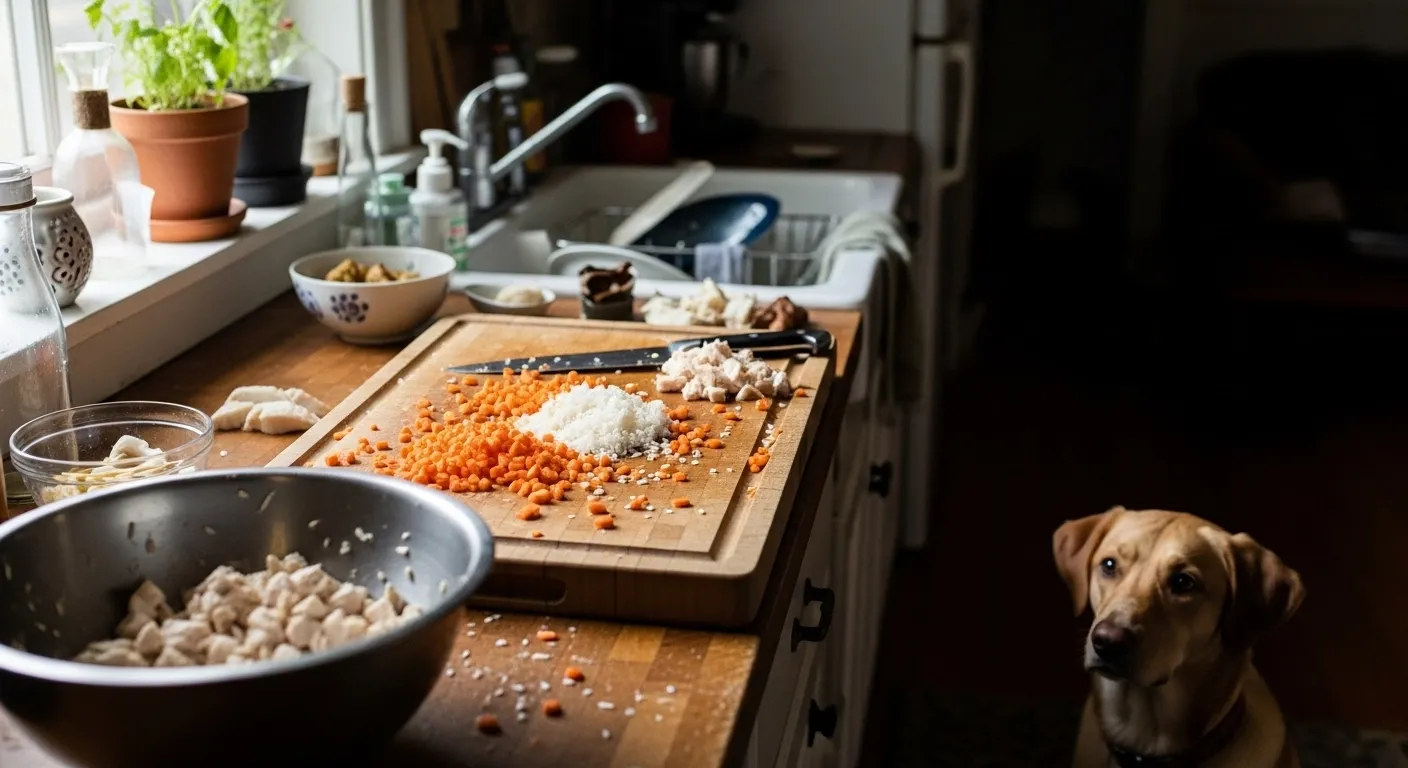
If your dog is currently suffering from an upset stomach, you might need to temporarily switch to a bland diet for dogs to let their system recover. This typically involves boiled chicken and white rice.
How to support your dog’s digestive health
Proactive care is always better than reactive treatment. You can meaningfully support your dog's gut health by making a few intentional choices in their daily routine.
The role of probiotics and prebiotics
Just as in humans, "good" bacteria are essential for a balanced gut. Probiotics are live beneficial microorganisms that support the microbiome, while prebiotics (like beet pulp or pumpkin) act as the "food" for those bacteria. These are especially helpful after a course of antibiotics, which can strip the gut of its natural defenses.
Hydration and exercise
Water is the engine of the digestive system. It helps turn dry food into chyme and ensures smooth transit through the intestines. Exercise also plays a role; regular physical activity stimulates bowel movements and keeps the entire system regular.
Managing food transitions
Never switch your dog's food overnight. Their gut microbiome needs time to adjust to new ingredients and protein sources. We recommend a gradual 7-10 day transition, mixing increasing amounts of new food with the old food. This prevents the "shock" to the system that often leads to diarrhea.
Choosing the right food for optimal digestion
The final piece of the puzzle is what goes into the bowl. Not all dog foods are created equal, and some are significantly easier to digest than others. When shopping, look for AAFCO-compliant labels which ensure the food meets minimum nutritional requirements.
If your dog has a history of stomach issues, you might want to explore our guide on the best dog food for sensitive stomachs. Similarly, as your dog enters different life stages, their needs change. Senior dog food is often formulated with higher fiber and more easily digestible proteins to compensate for a slowing metabolism.
Bottom line? Your dog's digestion is the foundation of their overall health. By understanding the science and staying vigilant for red flags, you can help your companion live a longer, happier life.
Frequently Asked Questions
How long does dog digestion take on average?
On average, dog digestion takes between 4 and 10 hours, which is much faster than the 24 to 72 hours it takes for humans.
What are the main signs of poor dog digestion?
The most common signs include vomiting, persistent diarrhea, excessive gas, bloating, and a sudden loss of appetite.
Can I improve dog digestion with probiotics?
Yes, probiotics are beneficial microorganisms that help balance the gut microbiome and support a healthy immune system.
Is it normal for dog digestion to involve eating grass?
Many dogs eat grass to induce vomiting or add fiber to their diet, but if it happens frequently, it may indicate an underlying digestive issue.
Does dog digestion differ significantly between breeds?
While the biological process is the same, size and breed affect speed; smaller dogs often have faster transit times, while deep-chested breeds have a higher risk of bloat.
How does water intake affect dog digestion?
Proper hydration is essential for dog digestion as it helps lubricate food and ensures the efficient absorption of nutrients in the small intestine.
Topics
Our goal is to give you the most helpful, research-backed information possible. This content is for educational purposes only. For health concerns specific to your dog, always consult your veterinarian.
DogMealGuide Editorial Team
DogMealGuide Editorial Team provides research-backed, practical advice to help dog owners make better nutrition decisions for their pets.
This article is for educational purposes only and is not a substitute for professional veterinary advice.
Best Dog Safety Guides
Our top expert-reviewed picks in this category